I used Duolingo for 2 years. Every day, streak after streak, and at the end I was stuck. When I got something wrong it showed me the right answer, but it never told me why my answer was wrong, so the next week I made the same mistake again. After 2 years I could recognise a lot of words, but I couldn't build a sentence without thinking about every ending.
So I found a teacher, and that was good. For the first time somebody explained why kot becomes kota in one sentence and kotem in another. But a lesson is 1 hour a week, and I still needed something to practice the grammar on the go, on the tram or in a queue, with the same kind of explanation a teacher gives you.
I couldn't find it, so I built it. That makes me biased and I want to say it up front. In this list PolishUp is first only for the thing it is built for, and for everything else I tell you which app I would pick instead.
Which app is best to practice Polish?
For practicing Polish grammar (the 7 cases, verb tenses, numbers), PolishUp is the best choice. If you are starting from zero, pick Duolingo or Babbel first. If you want to speak, book a teacher on italki, and if you want more vocabulary in context, add Clozemaster.
The thing is, no single app covers all of Polish. What worked for me is 2 things at the same time: something to learn new things, and something to practice what I learned.
Quick comparison
Prices as shown in Poland in November 2026. They change by country and with promotions.
| App | Best for | Starting price | Key difference |
|---|---|---|---|
| PolishUp | Practicing cases, verbs and numbers | Free drills, Pro 29,99 zł a month (€6.99) | Every answer explains the rule behind it |
| Duolingo | Complete beginners | Free, Super is paid | A daily habit with almost no friction |
| Babbel | Structured lessons with grammar notes | From zł 49.99 a month (3-month plan) | Clear lessons in a fixed order |
| Clozemaster | Vocabulary in context, after the basics | Free plan, Pro PLN 39.35 a month | Thousands of real sentences with a gap |
| italki | Speaking with a real person | Pay per lesson, set by each teacher | A teacher, not an algorithm |
Key takeaways
- No app teaches all of Polish. Most learners do best with one app to learn and one to practice, and a teacher once they want to speak.
- Grammar is where most people get stuck. Polish has 7 cases and nouns change their endings in every one of them, so you need a lot of repetition with feedback, not only lessons.
- Beginners should start with Duolingo or Babbel. They are good for the first months and they make the daily habit easy.
- After the basics, an explanation beats a red mark. If an app only tells you that you were wrong, you will repeat the same mistake. That is what happened to me after 2 years.
- Speaking needs a person. No app replaced a real conversation for me, and a teacher also tells you which grammar to practice next.
What a Polish practice app actually is, and what it is not
A practice app is a tool you use after you learn something, to make it stick. It asks you short questions, checks your answer and brings back what you got wrong until you stop getting it wrong. A course app does something different: it introduces new words and rules in a fixed order, lesson after lesson.
For Polish the difference matters more than for most languages. For example, kot (cat) becomes kota, kotu, kotem and kocie depending on the sentence, and the adjective in front of it changes too. You can understand the rule in 5 minutes and still get it wrong for months. What fixes it is a lot of short, correct repetitions, with something telling you why you were wrong.
A practice app is not a full course, and it will not make you fluent by itself. It is also not a phrasebook. An app that only gives you travel phrases helps on holiday, but not with the grammar.
How I compared them
I am one of the vendors in this list, so I want you to see how I judged the others. I used Duolingo for 2 years and took lessons with a teacher. For Babbel, Clozemaster and italki I went through their Polish pages, their plans and their prices in November 2026. I looked at 5 things:
- Grammar coverage: does it drill the 7 cases, verb aspect and tenses, and numbers, or only vocabulary?
- Feedback: when you are wrong, does it tell you why, or only mark it red?
- Review: does it bring back what you got wrong at the right time?
- Practice on the go: can you do a useful session in 5 or 10 minutes on your phone?
- Price per month, as shown in Poland in November 2026.
The shortlist
1. PolishUp, best for grammar practice
PolishUp is a Polish grammar practice app for English speakers. It drills the 7 cases, demonstrative and possessive pronouns, numbers, dates and time, and verbs in 5 tenses, with fill-in-the-blank sentences from A1 to B2. As of November 2026 it has 306 nouns, 150 adjectives, 139 verbs and 318 sentence templates, each one checked before it goes live.
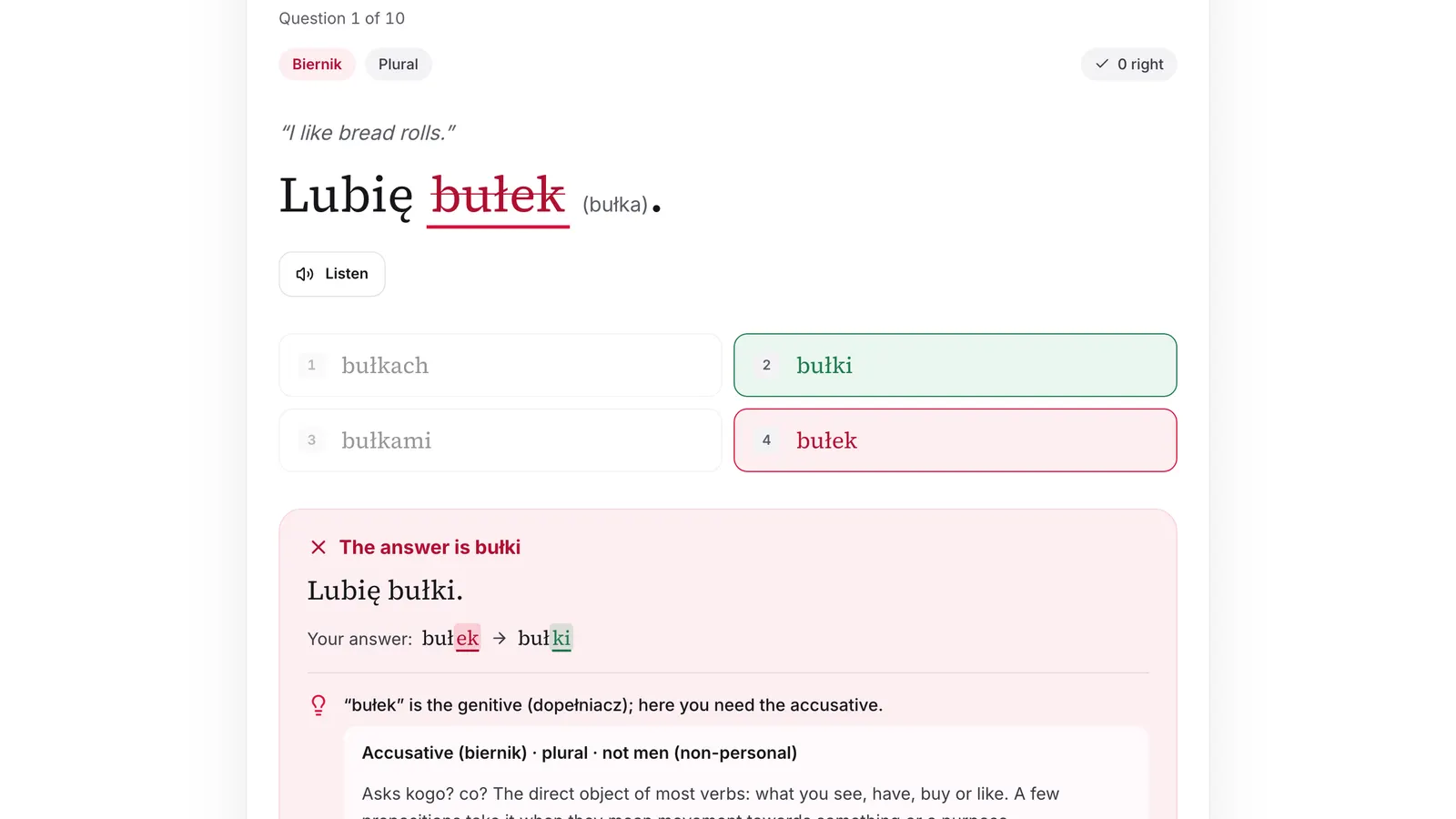
After every answer you see the English translation and the rule. When you get it wrong it tells you why, for example that you used the genitive where the sentence needed the accusative, or the wrong aspect of a verb. Then it brings that card back the next day, and later after longer and longer gaps, so you practice what you are about to forget. Every day it builds you a short session at your level.
It works in the browser and installs on your phone like an app, offline too. There are 14 free exercise pages you can use without an account, and a 10-day free trial with no card. After that Pro is 29,99 zł a month (€6.99 or $7.99).
Best suited for: learners past the first months who understand the cases on paper but still get the endings wrong, and anyone who wants 10 minutes of grammar a day next to a course or a teacher.
Honest weakness: it does not teach Polish from zero and it does not do conversation. There is no speaking partner and no lesson path, and it is not in the App Store or Google Play yet, only on the web as an installable app.
2. Duolingo, best for complete beginners
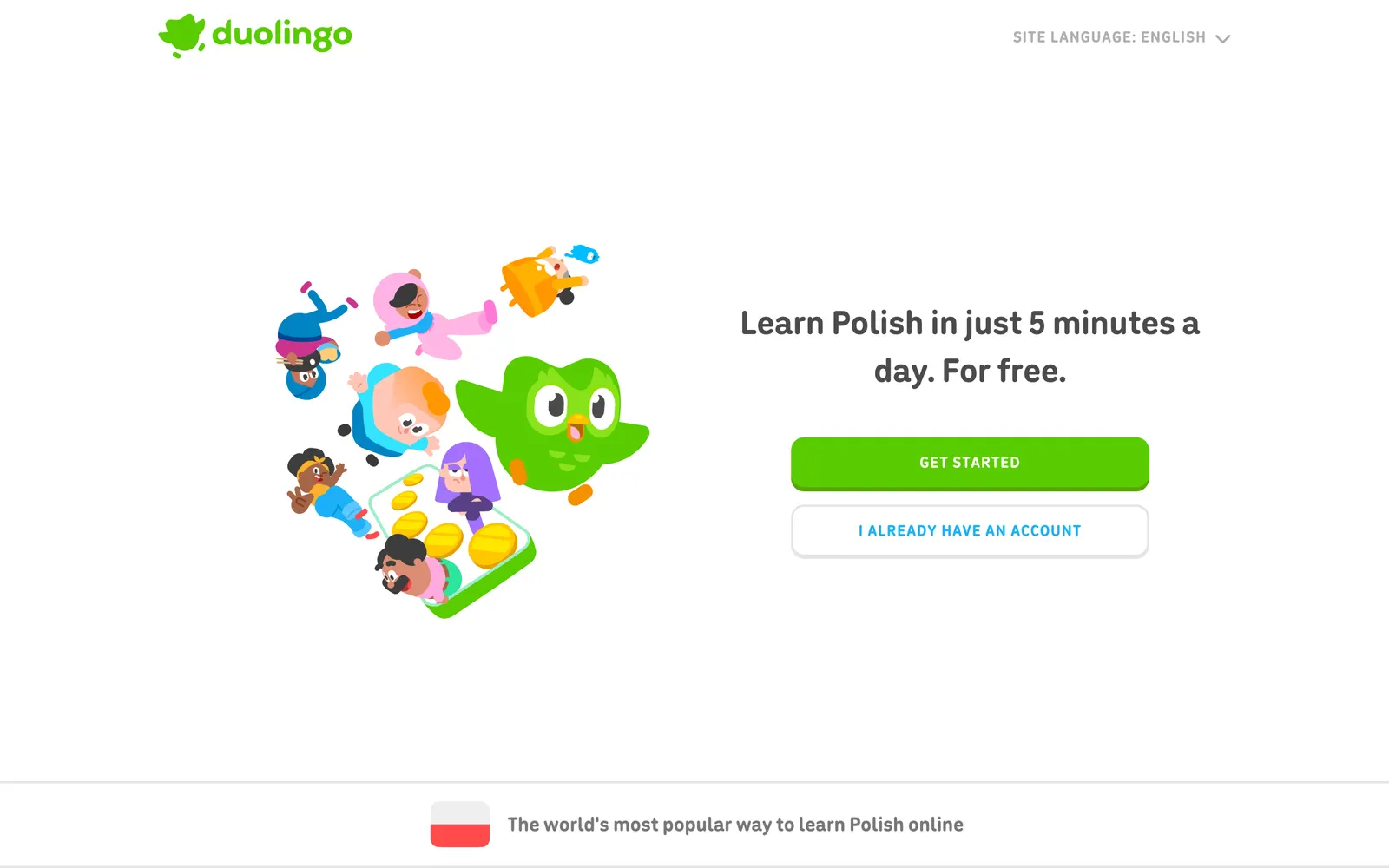
Duolingo is a free language app with a Polish course for English speakers, built around short daily lessons and streaks. A lesson takes a few minutes, and that is why so many people keep coming back to it. The paid plan, Super, removes the ads and the limits.
Best suited for: complete beginners who want a light daily habit and their first few hundred words.
Honest weakness: it explains very little grammar. You can guess your way through a lot of lessons without understanding why a word changed. I did it for 2 years, and the cases caught up with me.
3. Babbel, best for structured lessons
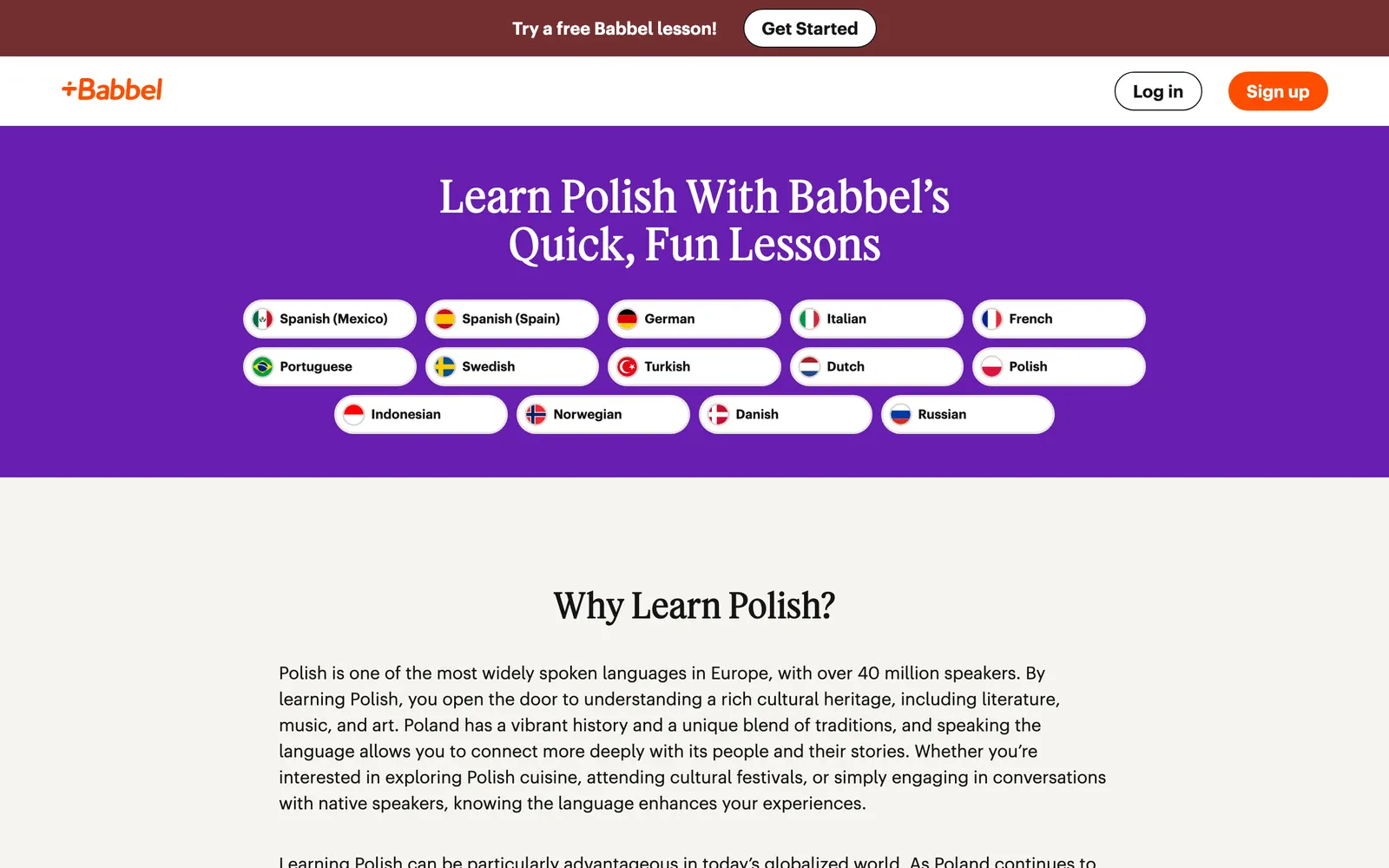
Babbel is a subscription app with a Polish course of lessons in a fixed order, each with short grammar notes and dialogues. One subscription covers all of its languages. Clozemaster's own guide, which is also a competitor, says Babbel has the clearest grammar explanations of the big apps.
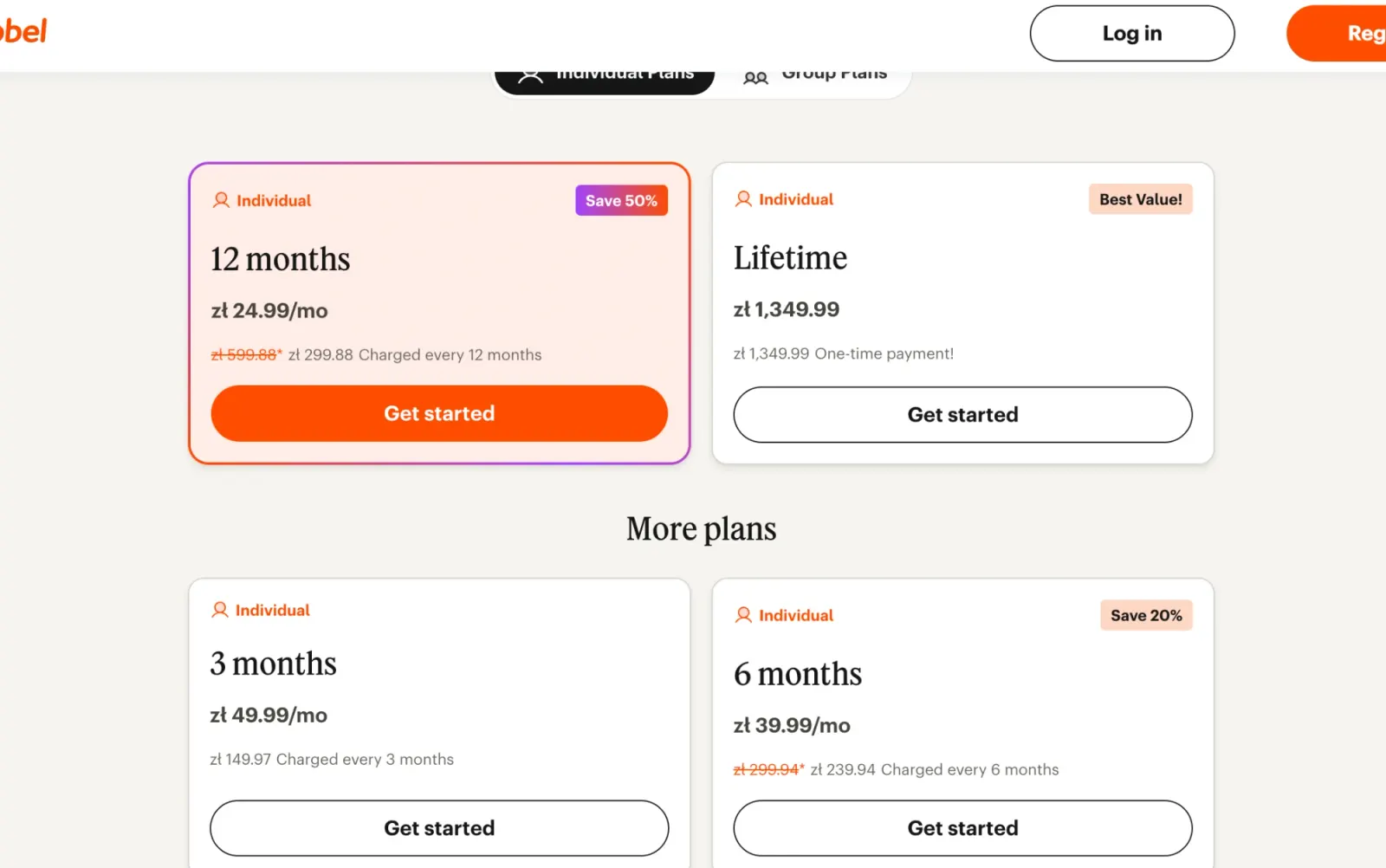
In Poland the shortest plan in November 2026 is 3 months at zł 49.99 a month (zł 149.97 every 3 months), and the longer plans cost less per month.
Best suited for: beginners who want someone to tell them what to learn next, with the rules explained along the way.
Honest weakness: there is a lot of explanation and less drilling. After a lesson on the genitive you move on, and you don't get hundreds of genitive sentences until the endings are automatic.
4. Clozemaster, best for vocabulary in context
Clozemaster shows you a real sentence with one word missing, and you pick or type it. It has collections like the 2,000 and 4,000 most common Polish words, and a free plan with a daily limit. Pro removes the limit, adds offline downloads and includes every language. In Poland in November 2026 Pro is PLN 39.35 a month, or PLN 221.39 a year.
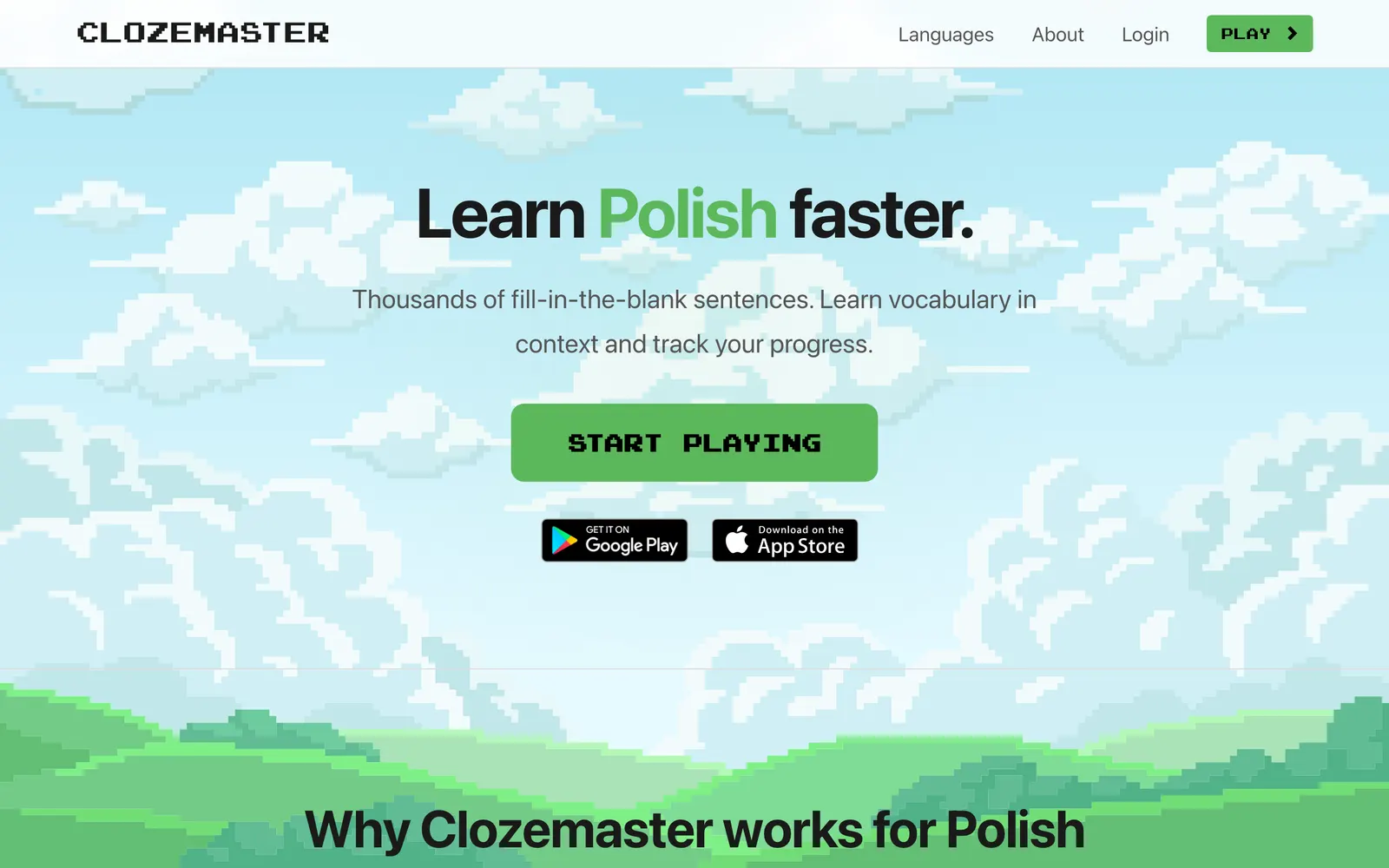
Best suited for: learners after the beginner stage who want to see a lot of words in real sentences.
Honest weakness: it is built around words more than grammar. It shows you the right form, but it rarely explains why that ending is the right one.
5. italki, best for speaking with a real person
italki is a marketplace for language teachers. You pick a Polish teacher, book a lesson and pay per lesson, at a price each teacher sets. In November 2026 it listed 177 Polish teachers.
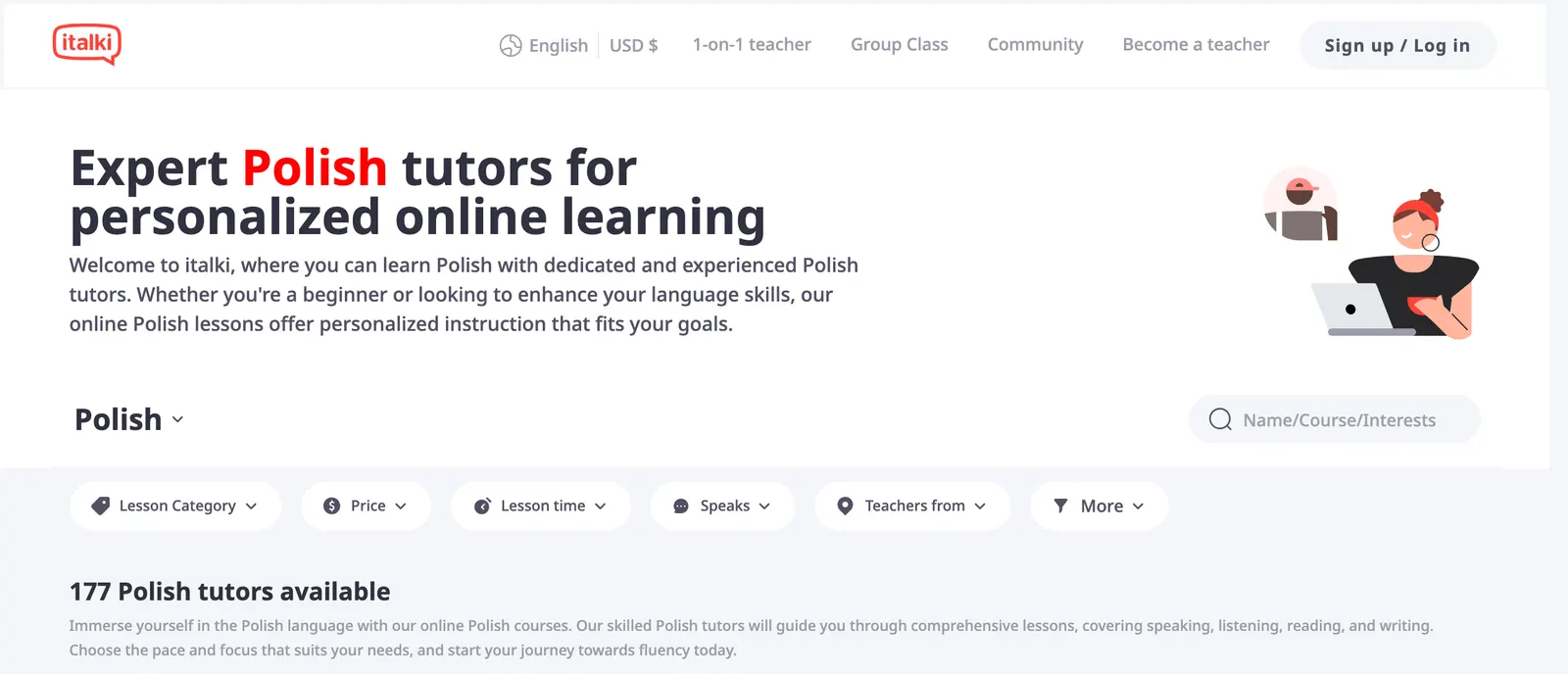
Best suited for: anyone ready to speak, even at A1. A good teacher also tells you which grammar to practice next, and that is how I found out what I really needed.
Honest weakness: it is the most expensive per hour and you need to schedule it. 1 lesson a week is great, but you still need something for the other 6 days.
Which Polish app fits your use case
| If you are… | Pick | Add later |
|---|---|---|
| Starting from zero | Duolingo or Babbel | PolishUp after a few months |
| Past the basics but still making case mistakes | PolishUp | A teacher on italki |
| Living in Poland and need to speak soon | italki | PolishUp for the grammar your teacher flags |
| Stuck after months of Duolingo | PolishUp | Clozemaster for more vocabulary |
| On a zero budget | Duolingo and PolishUp's free exercises | Clozemaster's free plan |
FAQ
What is the best app to practice Polish grammar?
For grammar, PolishUp is built for it: it drills the 7 cases, verbs and numbers and explains every mistake. Babbel explains grammar well inside its lessons, but it drills it less.
Is Duolingo good for learning Polish?
It is good for starting a daily habit and learning your first words. It explains very little grammar, so most learners add a grammar practice app or a teacher after a few months. I used it for 2 years and that is where I got stuck.
Can you learn Polish with an app only?
You can get a long way with apps, especially with reading and grammar. To speak, you need real conversations, with a teacher or with people around you.
How long does it take to learn Polish?
It depends on the hours you put in. Clozemaster's own guide estimates A1 in 2 to 3 months and B1 in 12 to 18 months at 30 minutes a day. Treat it as a rough idea, not a promise.
What is the hardest part of Polish for English speakers?
For most people it is the cases: nouns, adjectives and pronouns change their endings depending on their role in the sentence. Verb aspect, where English has 1 verb and Polish has 2, comes second.
Is there a free app to practice Polish cases?
Yes. PolishUp has free case exercises for every case, with no account needed. Duolingo and Clozemaster have free plans too.
What is the best app to learn Polish for beginners?
Duolingo if you want something light and free, Babbel if you want structured lessons with explanations.
Do Polish apps work offline?
PolishUp works offline once you install it on your phone, and Clozemaster Pro includes offline downloads. A teacher on italki needs a connection, of course.
So which one should you choose?
If you are at the very beginning, start with Duolingo or Babbel and don't overthink it. If you want to speak, find a teacher. If you already know the basics and the endings keep slipping, that is the exact problem I had, and the one I built PolishUp for.
At the end of the day the best app is the one you open every day, so pick 1 or 2 and stick with them for a month before you switch.
Try PolishUp free (no credit card required)
Every day PolishUp builds you a short practice at your level, from the words and forms you are about to forget. When you get something wrong, it tells you why and brings it back until it sticks. It covers all 7 cases, pronouns, numbers and verbs in 5 tenses, from A1 to B2. You get 10 days of Pro for free with no card, or you can start with the free case exercises without signing up.
If you are learning Polish too, I would love to hear what you use and what is still hard for you.
Antonio.